

Scalable Data-Driven Testing with Functional ATS
Functional decomposition + decoupled data = scalable automation
This demo shows how Agilitest enables true data-driven testing by combining:
• Functional decomposition (a reusable subscript that fills the form)
• Full separation between logic and data (external CSV file)
• Deterministic ATS execution without AI dependency
The Objective
Instead of generating one large automation script, we design:
✅ A functional subscript responsible only for filling the form
✅ A parent script that iterates over a dataset
✅ A separate CSV file containing multiple test profiles
This creates:
• Reusability
• Scalability
• Clean architecture
• Maintainability
• And most importantly:The final automation is pure ATS — no AI required to execute it.
The AI generates the script and functional tree
The AI proposes a complete Data File Set
ATS guarantees its execution
This demo shows how Agilitest enables true data-driven testing by combining:
• Functional decomposition (a reusable subscript that fills the form)
• Full separation between logic and data (external CSV file)
• Deterministic ATS execution without AI dependency
The Objective
Instead of generating one large automation script, we design:
✅ A functional subscript responsible only for filling the form
✅ A parent script that iterates over a dataset
✅ A separate CSV file containing multiple test profiles
This creates:
• Reusability
• Scalability
• Clean architecture
• Maintainability
• And most importantly:The final automation is pure ATS — no AI required to execute it.
The AI generates the script and functional tree
The AI proposes a complete Data File Set
ATS guarantees its execution
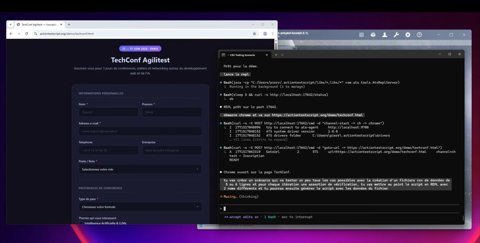
Step 1 — Defining the Data-Driven Intent
Claude receives instructions to create a data-driven test scenario with multiple profiles.
The objective is to validate several combinations of:
• Roles
• Pass types
• Themes
• Experience levels
• Budget slider
• Optional fields
Instead of duplicating logic, we will factorize behavior.
The objective is to validate several combinations of:
• Roles
• Pass types
• Themes
• Experience levels
• Budget slider
• Optional fields
Instead of duplicating logic, we will factorize behavior.
Step 2 — Identifying Form Elements
Using the REPL, Claude identifies all interactive components:
• Text inputs
• Select fields
• Checkboxes
• Radio buttons
• Slider
• Toggles
• Submit button
This ensures we build a reliable functional subscript.
• Text inputs
• Select fields
• Checkboxes
• Radio buttons
• Slider
• Toggles
• Submit button
This ensures we build a reliable functional subscript.
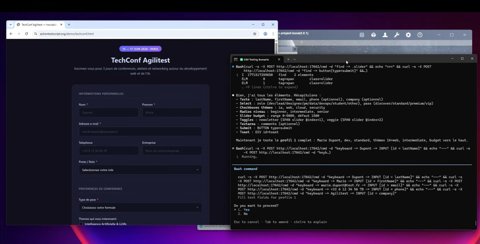

Step 3 — First Functional Entry
A first profile is entered interactively to validate:
• Correct selectors
• Expected behavior
• Budget slider value control
This validates the functional flow before generalizing it.
• Correct selectors
• Expected behavior
• Budget slider value control
This validates the functional flow before generalizing it.
Step 4 — Graphical Slider vs Real Value
Although the slider is graphical, ATS retrieves the real numeric value for assertion.
This guarantees:
• Visual interaction
• Functional verification
• Deterministic validation
We validate actual business values — not pixels.
This guarantees:
• Visual interaction
• Functional verification
• Deterministic validation
We validate actual business values — not pixels.
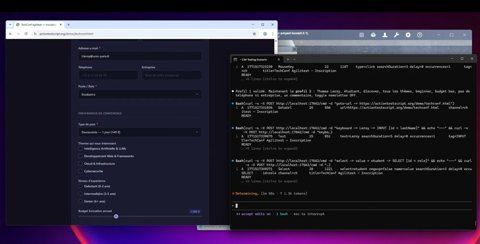
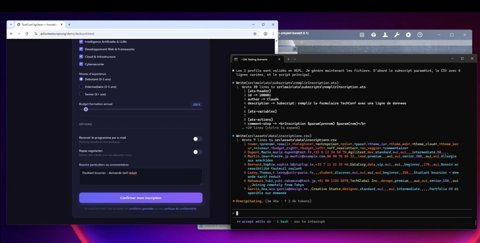
Step 5 — Second Profile Validation
A second profile is tested to confirm:
• Different role
• Different pass
• Different budget
• Optional fields left empty
This ensures the flow supports variable data.
• Different role
• Different pass
• Different budget
• Optional fields left empty
This ensures the flow supports variable data.
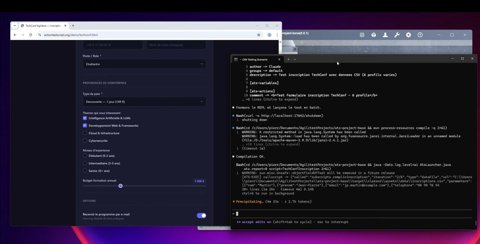
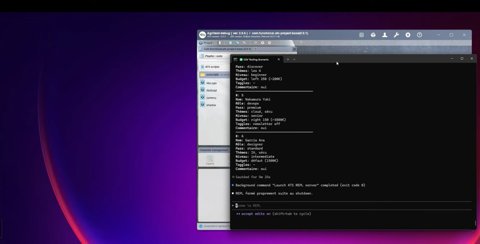
Step 6 — Creating the Functional Subscript and Data File
Claude generates:
A reusable subscript:
The CSV contains only data.
This is the core principle: Logic ≠ Data
A reusable subscript:
remplirInscription.ats
A CSV file: inscriptions.csv
The subscript contains only the functional logic to fill the form.The CSV contains only data.
This is the core principle: Logic ≠ Data
Step 7 — Parent Script Orchestration
The parent script:
• Opens the browser
• Calls the subscript
• Passes each row of the CSV
• Closes the channel
This creates a clean layered architecture:
Parent script → Functional subscript → Data file
• Opens the browser
• Calls the subscript
• Passes each row of the CSV
• Closes the channel
This creates a clean layered architecture:
Parent script → Functional subscript → Data file
Step 8 — Generated Data File
The CSV contains multiple varied profiles:
• Students
• Developers
• Senior profiles
• Different budgets
• Optional fields populated or empty
The test coverage is driven by data variation — not script duplication.
• Students
• Developers
• Senior profiles
• Different budgets
• Optional fields populated or empty
The test coverage is driven by data variation — not script duplication.
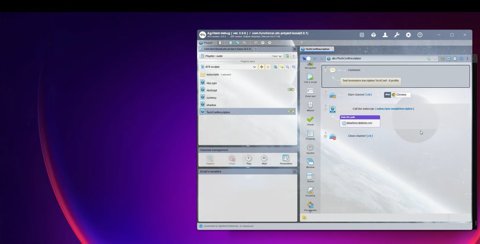

Step 9 — Conditional Logic in the Subscript
The subscript includes conditions such as:
IfNotEmpty($param(phone)) → enter value
This ensures:
• Optional fields are handled properly
• Empty CSV values do not break the flow
• The script remains generic and reusable
IfNotEmpty($param(phone)) → enter value
This ensures:
• Optional fields are handled properly
• Empty CSV values do not break the flow
• The script remains generic and reusable
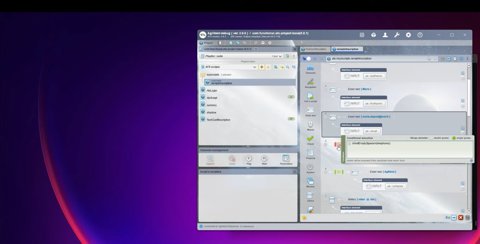
Step 10 — Compiled ATS Execution
The REPL is closed.
The test is compiled and executed in standard ATS mode.
At this stage:
• No AI is required
• No Claude runtime is involved
• The script runs in CI/CD normally
The result is a pure functional ATS data-driven test.
The test is compiled and executed in standard ATS mode.
At this stage:
• No AI is required
• No Claude runtime is involved
• The script runs in CI/CD normally
The result is a pure functional ATS data-driven test.
What This Demonstrates
This demo demonstrates three critical principles:
1. Functional Decomposition
A reusable subscript encapsulates business behavior:
Fill the form
Handle optional values
Validate the budget
2. Data Decoupling
The CSV is fully independent:
Test scenarios evolve without touching the logic
New cases are added by editing data only
Non-technical users can modify test coverage
3. Deterministic Execution
The final artifact is:
Human-readable ATS
Versionable in Git
Executable in CI/CD
Independent from AI
AI accelerates the creation phase.
ATS guarantees execution stability.
1. Functional Decomposition
A reusable subscript encapsulates business behavior:
Fill the form
Handle optional values
Validate the budget
2. Data Decoupling
The CSV is fully independent:
Test scenarios evolve without touching the logic
New cases are added by editing data only
Non-technical users can modify test coverage
3. Deterministic Execution
The final artifact is:
Human-readable ATS
Versionable in Git
Executable in CI/CD
Independent from AI
AI accelerates the creation phase.
ATS guarantees execution stability.
See Agilitest in action. Schedule a demo
And see the benefits you can unlock from smart test automation.
The tests scenarios can be replayed in ATS, our Open-Source backbone.
For free and forever.
For free and forever.


